Curriculum overview
At The Levett School, our curriculum helps pupils re-engage with learning, develop confidence and make progress from their individual starting points. As a pupil referral unit, we recognise that pupils may join us with interrupted education, gaps in knowledge and a range of social, emotional and special educational needs.
Our curriculum combines academic learning with opportunities to develop communication, independence, emotional regulation and positive relationships. We maintain high expectations while adapting teaching so that pupils can experience success and prepare for the next stage of their education.
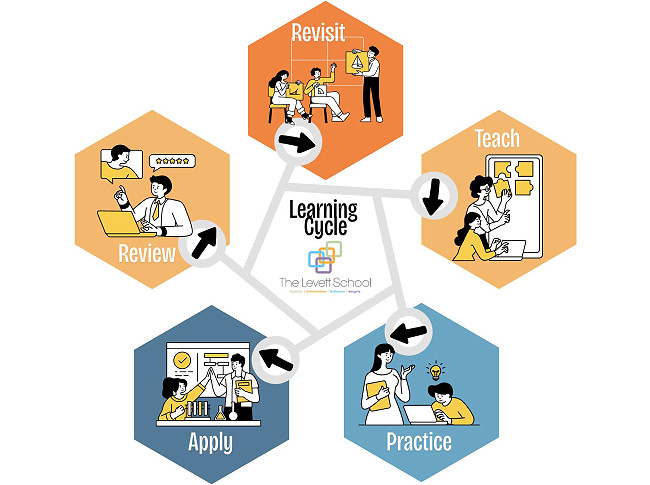
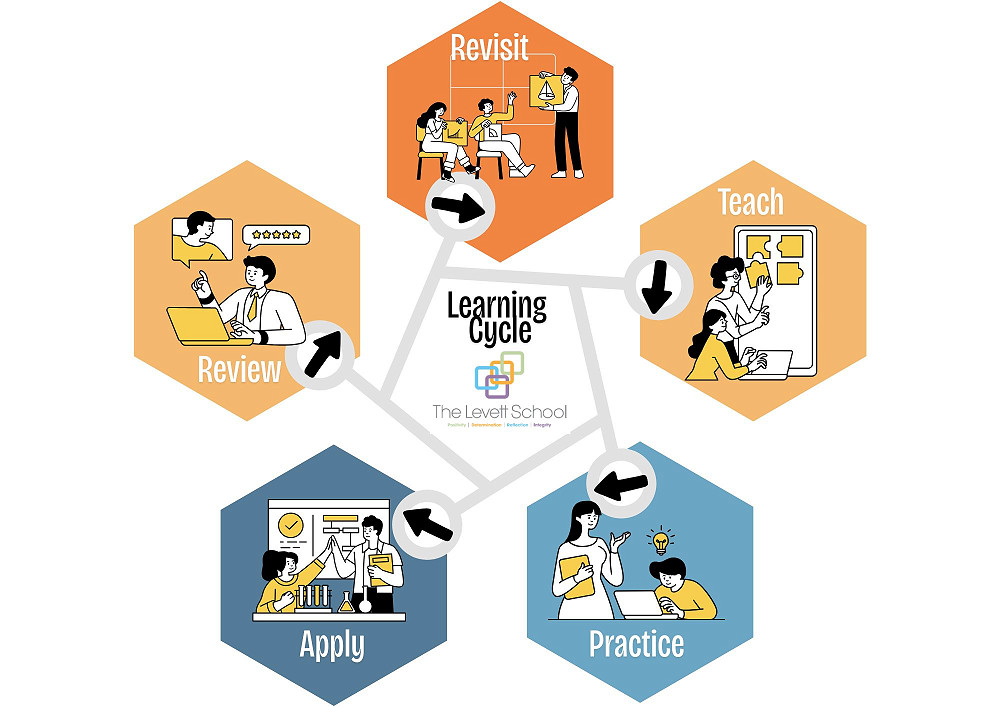
Our Revisit–Teach–Practice–Apply–Review learning cycle provides a consistent approach across the school:
Revisit: recall previous learning and identify gaps.
Teach: introduce and model new knowledge and skills.
Practice: develop understanding through supported practice.
Apply: use learning with increasing independence.
Review: reflect on progress, check understanding and identify next steps
Assessment is ongoing. Teachers use pupils’ starting points, classroom observations, discussions, work and assessment information to identify what pupils know and what they need to learn next. Progress reviews inform teaching, adaptations and targeted intervention.
Reintegration is central to our purpose. We work with pupils, families, receiving schools and other professionals to support carefully planned transitions. Alongside academic progress, we develop the confidence, relationships and learning habits pupils need to sustain a successful placement.
Class curriculum maps
Our curriculum maps set out the planned learning for each class, identifying the year groups, academic year and relevant year of our two-year rolling programme. This approach supports our mixed-age classes while helping pupils build knowledge and skills over time.
We use resources including Cornerstones and Oak National Academy to support curriculum planning. Teachers adapt planned learning to address assessment findings, pupils’ needs and gaps arising from previous educational experiences.
Subject information
Our subject information explains the knowledge and skills pupils develop across the curriculum. Where subjects are taught through a shared topic, their distinct learning remains identifiable.
This includes making clear how pupils learn in music, computing and religious education, alongside other curriculum subjects. Practical activities and opportunities to apply learning help pupils connect classroom knowledge with everyday experiences.
Reading and phonics
Reading is a whole-school priority. We aim to develop pupils’ reading accuracy, fluency, understanding and enjoyment so that they can access learning across the curriculum.
We use Little Wandle to support phonics teaching. Assessment helps staff identify pupils who need additional support, including older pupils with gaps in early reading. Teaching and intervention respond to these needs, with opportunities to practise and revisit learning.
Reading records, assessment information and reading logs help us monitor progress and identify next steps. Access to books and our school library supports reading for pleasure.
Adaptations and SEND
Teaching responds to pupils’ assessed starting points, special educational needs and any provision specified in their Education, Health and Care Plans (EHCPs).
Adaptations may include smaller learning steps, explicit modelling, visual support, practical resources, additional repetition and supported practice. Targeted interventions complement classroom teaching and address identified needs.
Teachers and the SENDCo review provision and progress together, adjusting support to promote participation, independence and achievement.
Further information and linked documents
Our curriculum information should be read alongside our class curriculum maps, subject overviews, SEND Information Report, SEND Policy, Accessibility Plan, Relationships and Sex Education Policy and Music Development Plan.
Parents and carers who would like to discuss their child’s learning or find out more about the curriculum can contact their child’s class teacher or the SENDCo through the school office.
Please see subject leadership roles below:
Curriculum Lead: Emma Place
Assistant Curriculum Lead, Foundation Subject and RE Lead: Sara Rook
Maths, Data and Assessment Lead: Lydia Shipley
Phonics, Early Reading and Writing Lead: Shannon Robertson
ECO Lead: Amanda Brown
Careers Lead: Hayley Johnston and Amanda Brown
PSHE Lead: Rachel Kelly